
Philosophy & systems thinking
See first. Then understand. Only then change.
Every question starts the same way: first look at what is actually happening, before anything changes. Most attempts at improvement fail not through lack of effort, but because they tackle the symptom instead of the system underneath.
A process is introduced at some point for a good reason. Ten years later nobody remembers that reason, but everybody still follows the steps. That is how complexity piles up: quietly, invisibly and rarely on purpose.
Only when you step back from the daily reflexes do you see where energy leaks away.
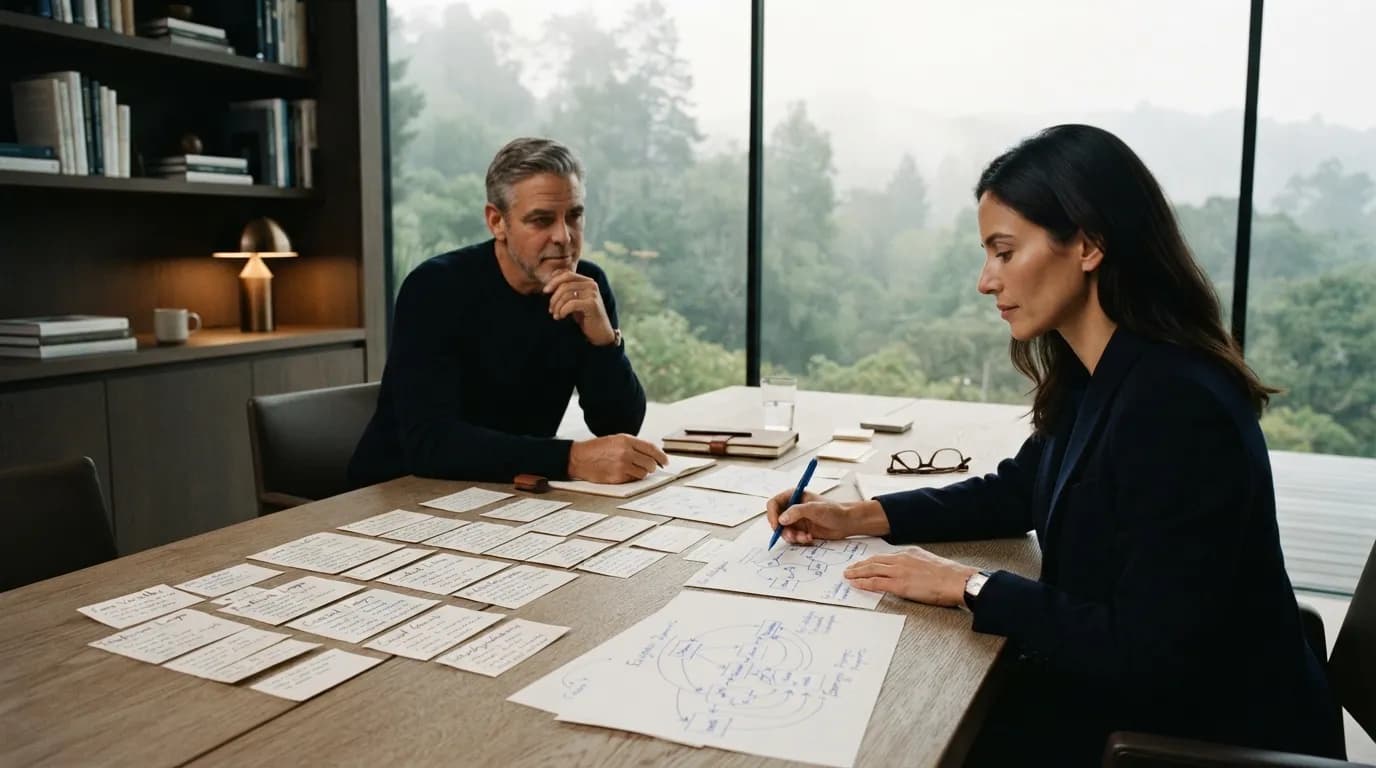
Unravelling complexity takes calm, precision and an open eye.
The four phases
From noise to overview
We replace assumptions with facts. Look, understand, simplify, build — in that order you get a foundation that holds.
Look
We map how things actually run today. Without assumptions and without immediate judgement. We follow the flow of data, decisions and tasks as it is.
Understand
Two steps check the same thing. One loop runs back to the start. Where does friction appear, and why? We look for the dynamics that shape daily work without anyone noticing them any more.
Simplify
Whatever no longer serves a purpose goes. No duplicate reporting, no redundant checks, no habits nobody can explain. Leaving things out delivers the most.
Build
What remains is shorter, easier to hand over and calmer to work in. We set up automation, dashboards and routines so that they reinforce each other.
The parallel
What happens to processes also happens to people.
In a spreadsheet everything looks logical. But systems are designed, maintained and worked around by people, with their convictions, fatigue and habits.
- An assumption becomes a fact over time.
- A temporary habit quietly turns into policy.
- A response to a crisis five years ago still shapes your working week.
The biggest steps are not taken in the software alone, nor in the conversations alone, but where those two come together. If you cannot see the undercurrent, you keep mopping with the tap running.
“Most energy is not lost in what actually happens, but in our automatic reaction to it.”
Haro Hollertt
Convictions
Three guiding principles
No jargon and no elaborate models. Sober and precise.
No off-the-shelf advisory models
A model from a management book pushes your business into someone else’s shape. I start with a blank sheet and build only what works in your situation.
Numbers do not lie, but they leave a lot unsaid
As a controller and trader I learned that numbers are a snapshot of the past. What you do not see in them: the hours that leak away, the work left undone and the decisions nobody takes.
Simplicity is the highest form of refinement
Anyone can make something complicated. The skill is leaving things out until only what truly matters remains.
From noise to control
Clear systems give entrepreneurs their freedom back.
When your business works for you instead of against you, space appears in your head. That is where choices become clear and the enjoyment comes back.
Would you like to hold your situation up to the light?
You do not need to have the problem sharply defined. Describe what you see, where it chafes or what you are unsure about. We will look at it together, calmly.